

Bioidentical Hormones Explained: Comparing BHRT to Synthetic Hormones
Dr. Christopher Weiss, MD, explains the difference between Bioidentical Hormone Replacement Therapy (BHRT) and synthetic hormones, why hormone structure matters, and how a personalized, root-cause approach to hormone health can help you feel your best.

If you've started researching hormone replacement therapy, you've probably come across the terms Bioidentical Hormone Replacement Therapy (BHRT) and synthetic hormones. Unfortunately, there's a lot of conflicting information online, and it can be difficult to know what is true and what hormone replacement is best for you and your unique needs.
My belief is that the goal of hormone replacement therapy isn't simply to replace hormones because someone reaches a certain age. It's to understand why someone is experiencing symptoms, determine whether hormones are actually part of the picture, and create a treatment plan that's personalized to that individual.
Let's start by defining what these terms actually mean.
First, What Are Hormones?
Hormones are chemical messengers that allow different parts of your body to communicate with one another.
They help regulate nearly every major system in the body, including:
Energy levels
Mood
Sleep
Metabolism
Muscle mass
Bone health
Libido and sexual function
Brain function
As we age, it's normal for hormone production to gradually change and most commonly decline. For some people, those changes are barely noticeable. For others, declining hormone levels can significantly impact how they feel and function. That's where hormone replacement therapy may become part of the conversation.
What Are Synthetic Hormones?
Synthetic hormones are medications that are manufactured in a laboratory to mimic the effects of the hormones your body naturally produces. While they're designed to act like hormones such as estrogen or progesterone, their molecular structure is not identical to the hormones your body makes on its own.
Hormone medications have been used for decades. Some of the earliest hormone replacement therapies became widely available in the 1940s and 1950s and were developed long before bioidentical hormone therapies became more common. Many of these medications were created to effectively relieve symptoms of menopause and other hormone deficiencies and have been studied extensively over the years.
Examples include medications such as medroxyprogesterone acetate and conjugated equine estrogens.
Like any medication, synthetic hormones come with potential benefits, risks, and side effects, including considerations related to certain hormone-sensitive cancers, that should be evaluated based on each person’s health history and goals.
What is Bioidentical Hormone Replacement Therapy (BHRT)?
The term bioidentical refers to a hormone's molecular structure. Bioidentical hormones are chemically identical to the hormones naturally produced by the human body. In other words, the molecule is the same whether your body makes it or it's produced in a laboratory.
Although bioidentical hormones have gained significant attention over the past two decades, they're not a new concept. Researchers have been studying and using bioidentical forms of hormones for many years, and today several FDA-approved hormone therapies use bioidentical estradiol and progesterone.
As our understanding of hormone physiology has evolved, many providers, such as myself, have increasingly incorporated bioidentical hormones into practice because they offer another evidence-based option for appropriately selected patients. That doesn't mean they're the right choice for everyone, but they have become an important part of modern hormone replacement therapy.
One common misconception is that bioidentical hormones are simply "natural hormones" taken directly from plants. While many bioidentical hormones begin with plant compounds derived from soy or wild yams, they're extensively processed and purified before becoming medication. By the time they're prescribed, they're pharmaceutical products, not simply plant extracts.
Current evidence does not suggest an inherent increased cancer risk with bioidentical hormone therapy.
Common bioidentical hormones include:
Estradiol
Micronized progesterone
Testosterone
Why Does Structure Matter?
One way I like to explain this is by thinking about hormones as keys.
Hormones work by attaching to receptors throughout the body. Those receptors act like locks, and the hormone acts like the key. Because bioidentical hormones have the same molecular structure as your body's natural hormones, they fit those receptors in the same way your own hormones do.
Synthetic hormones may interact with those receptors differently because their structure is different. That difference can influence how the body metabolizes the hormone, how long it remains active, and how it affects different tissues.
Why I Prefer Bioidentical Hormone Replacement Therapy (BHRT)
When hormone replacement therapy is appropriate, I prefer BHRT whenever possible. Because these hormones are chemically identical to those your body naturally produces, they're designed to interact with your body's hormone receptors in the same way your own hormones do.
I've dedicated additional training to hormone optimization through WorldLink Medical, including attending multiple advanced conferences focused on evidence-based BHRT. That education, combined with my experience caring for patients, has reinforced my belief that hormone replacement should be thoughtful, individualized, and based on each person's unique needs rather than a one-size-fits-all approach.
One of the biggest reasons I believe in BHRT is the transformation I've seen in my own patients. When hormones truly are part of the problem and we take the time to optimize them appropriately, I've watched men regain their confidence, rebuild strength and muscle, improve their energy, and feel like themselves again. I've seen women experience more stable energy throughout the day, improved sleep, better mood, clearer thinking, and a renewed sense of well-being.
That doesn't mean BHRT is the answer for every symptom or every patient. Hormone therapy should always be considered alongside your medical history, symptoms, laboratory findings, and overall health. But when it's the right fit, the improvements can be truly life changing.
Why Are Hormone Problems So Common Today?
One question I hear often is:
"If hormone imbalance is so common today, why didn't our grandparents seem to struggle with it?"
The truth is, there probably isn't one single answer.
Today's world exposes us to far more substances that can interfere with our hormonal health than previous generations experienced. These compounds, known as endocrine disruptors, can interfere with the body's normal hormone signaling.
They're found in many aspects of modern life, including:
Plastics and food packaging
Personal care and beauty products
Household cleaning products
Pesticides and herbicides
Some food additives
Contaminants in our water supply
While we're still learning about the long-term effects of these exposures, research suggests they may contribute to changes in hormone balance for some individuals.
At the same time, our lifestyles have changed dramatically. Chronic stress, poor sleep, processed foods, sedentary habits, obesity, and environmental toxins can all influence the body's ability to produce, metabolize, and regulate hormones.
And there's another important difference.
Many previous generations simply accepted fatigue, weight gain, poor sleep, low libido, and declining energy as an unavoidable part of getting older. Today, we recognize that while some hormonal changes with aging are expected, feeling miserable doesn't have to be.
I often tell my patients: "Normal isn't always optimal."
My goal isn't to help you simply survive the aging process. It's to help you feel energized, healthy, and capable so you can fully enjoy the years ahead.
Could You Benefit from Bioidentical Hormone Replacement Therapy (BHRT)?
As we age, it's normal for our bodies to gradually produce fewer hormones. For women, estrogen and progesterone naturally decline during perimenopause and menopause. For men, testosterone levels typically decrease more gradually over time. Just because these changes are common doesn't mean you have to accept them as your new normal.
For women, symptoms may include:
Hot flashes
Night sweats
Brain fog
Mood changes
Sleep disturbances
Vaginal dryness
Decreased libido
Weight gain
For men, symptoms may include:
Fatigue
Reduced muscle mass and strength
Increased body fat
Weight gain
Lower libido
Slower recovery after exercise
Difficulty maintaining motivation and focus
But Here's the Question I Always Ask: Why?
One of the reasons I enjoy practicing functional medicine is that we don't stop at identifying what is happening. We ask why it's happening.
One of the first questions I ask my patients is simple:
If you once felt great and now you don't, what changed?
Was it simply the natural aging process? Did your symptoms begin after an illness, pregnancy, injury, surgery, or a particularly stressful season of life? Have years of poor sleep, chronic stress, environmental exposures, or nutritional deficiencies gradually taken their toll? Sometimes there's a clear turning point. Other times, the changes happen so gradually that people don't realize how differently they feel until they look back.
Hormones may absolutely be part of the answer, but they're rarely the entire story. My job is to connect the dots and understand why your body is functioning differently today than it was years ago.
That's why we look beyond hormone levels alone. We also evaluate factors that can influence how your body produces, metabolizes, and responds to hormones, including:
Chronic stress
Poor sleep
Insulin resistance
Thyroid dysfunction
Nutrient deficiencies
Gut health issues
Chronic inflammation
Mold or environmental toxin exposure
Endocrine-disrupting chemicals
Long COVID or other chronic illnesses
If we simply replace hormones without understanding what's driving the imbalance, we may miss opportunities to improve your overall health. My goal is to identify the root causes contributing to your symptoms and create a plan that helps you feel like yourself again.
What to Expect at Your Appointment
When you come to see me for concerns about your hormones or overall health, my goal isn't simply to prescribe medication. My first priority is getting to know you and understanding your health story.
We'll spend time discussing your symptoms, medical history, lifestyle, nutrition, sleep, stress, exercise habits, and any changes you've noticed over time. One of the questions I often ask is, "When did you last feel your best?" Understanding what has changed helps us identify potential root causes instead of simply treating symptoms.
From there, we'll use blood work as one piece of the puzzle, not the entire picture. Your symptoms, medical history, and overall health are just as important as your hormone levels. If Bioidentical Hormone Replacement Therapy (BHRT) is appropriate, we'll develop a personalized treatment plan together.
I don't believe in writing a prescription and sending you on your way. Hormone optimization is a process, not a one-time event. I'll continue working alongside you, monitoring how you're feeling, reviewing your updated blood work, and making thoughtful adjustments along the way. As your body responds, we'll fine-tune your treatment with the goal of helping you regain your energy, improve your sleep, restore your strength, and ultimately help you feel like yourself again.
If hormones aren't the primary driver of your symptoms, we'll focus on identifying and addressing the underlying factors that are. My goal isn't to chase numbers on a blood test. It's to understand why you don't feel like yourself and create a personalized plan that helps you feel your best for the long term.
More Than Hormone Replacement
Understanding the difference between synthetic hormones and Bioidentical Hormone Replacement Therapy (BHRT) is an important first step, but it's only part of the conversation. The right treatment isn't determined by a headline or what's popular. It's determined by your symptoms, your health history, your goals, and what's happening inside your body.
If you're experiencing symptoms you think may be related to hormone imbalance, you don't have to navigate it alone. At Restore + Revive, I take a personalized, root-cause approach to hormone health. Together, we'll work to understand why you're not feeling your best and determine whether BHRT or another treatment approach is the right fit for you.
I believe normal isn't always optimal. My goal is to help you regain your energy, improve your health, and feel your best so you can fully enjoy the years ahead.
To learn more or schedule an appointment with Dr. Weiss, call 817-720-6220.
Disclaimer: The information provided in this blog is for educational and informational purposes only and is not intended as medical advice. Always consult with your healthcare provider before starting any new service, product, or treatment. Please note that prices, offerings, and other details mentioned in this post reflect information available at the time of publication and may have changed since.

Back-to-School: Helping Your Child Have a Healthy Start to the School Year
Help your child head back to school feeling rested, healthy, and ready to learn. Restore + Revive’s Nurse Practitioner, Emmaline Rhodes, shares practical back-to-school tips on sleep, nutrition, immune support, emotional wellness, and healthy routines that can set your family up for a successful school year.

By Emmaline Rhodes, FNP-C
Back-to-school season is exciting, but it also comes with a lot of change. After months of later bedtimes, flexible schedules, vacations, and more time outside, children are suddenly expected to wake up early, sit in the classroom all day, and adjust to new teachers, classmates, and routines.
For some kids, that transition is easy. For others, it can take a few weeks for their bodies and emotions to catch up.
The good news is that you don't have to completely overhaul your family's routine. A few intentional changes before school starts can help your child feel more rested, focused, and prepared for the year ahead.
Here are a few of the things I encourage families to focus on.
Start Resetting Sleep Before School Starts
One of the biggest adjustments children make isn't actually going back to school. It's resetting their internal body clock, also known as their circadian rhythm.
During the summer, later bedtimes and sleeping in are completely normal. But our bodies don't instantly adjust to an earlier schedule.
Instead of waiting until the night before school starts, begin adjusting bedtime and wake-up time 2–3 weeks before school begins. Try moving both earlier by about 15–30 minutes every few days. Small changes are much easier than one big shift.
Help Support the Transition
As you're adjusting your child's schedule, these simple habits can help support their natural sleep cycle:
Get outside for morning sunlight whenever possible.
Turn off screens at least an hour before bedtime.
Keep bedtime and wake-up times as consistent as possible—even on weekends.
Create a calming bedtime routine with reading, bath time/showers, or quiet conversation.
These habits help your child's brain recognize when it's time to be awake and when it's time to rest.
Why Sleep Matters
Sleep does so much more than prevent cranky mornings.
While your child sleeps, their brain is processing new information, their immune system is hard at work, and growth hormone is released to support healthy growth and development.
Children who consistently get enough sleep often have an easier time with:
Focus and attention
Emotional regulation
Learning and memory
Athletic recovery
Immune function
The American Academy of Sleep Medicine recommends 9–12 hours of sleep for children ages 6–12 and 8–10 hours for teenagers.
Fuel Their Brain for the School Day
Breakfast truly sets the tone for the rest of the day.
Many quick breakfast foods, like sugary cereal, pastries, or toaster waffles, are high in refined carbohydrates. These foods can cause blood sugar to rise quickly and then crash a few hours later, leaving children hungry, tired, or struggling to focus before lunch.
Instead, try building breakfast around protein, healthy fats, and fiber.
Some simple ideas include:
Eggs with fruit
Greek yogurt with berries
A protein smoothie packed with fruits, veggies, & fiber (chia seeds, flax, etc)
Whole-grain toast with peanut or almond butter + bananas and blueberries
Protein helps provide more steady energy throughout the morning and supports healthy brain function, growth, and muscle development.
Don't forget hydration, either. Even mild dehydration can affect concentration, mood, and physical performance. Sending your child to school with a reusable water bottle is one of the easiest ways to support them throughout the day.
Support Their Immune System
Back-to-school season also means increased exposure to germs. Kids are spending more time indoors, sharing classrooms, and likely interacting with many more people than they were over the summer.
While getting sick occasionally is a normal part of childhood, there are several ways to help support a healthy immune system.
The biggest difference makers are often the basics:
Prioritize quality sleep.
Eat a variety of whole, nutrient-dense foods.
Stay hydrated.
Encourage daily movement.
Spend time outside whenever possible.
These habits help support the immune system all year long, not just during cold and flu season.
What About Supplements?
Every child is different, and supplements should never replace healthy nutrition and lifestyle habits. That said, there are several nutrients we commonly discuss with families, especially during the school year.
Vitamin D
As children head back into the classroom, they're naturally spending less time outside.
Vitamin D supports bone health, immune function, and healthy growth. If your child spends most of the day indoors or has a known deficiency, talk with your healthcare provider about whether supplementation may be appropriate.
Omega-3 Fatty Acids
Omega-3s support brain development and may help support attention, learning, and overall brain health.
Good food sources include salmon, sardines, walnuts, flaxseed, and chia seeds.
Probiotics
A healthy gut plays an important role in immune function.
While not every child needs a probiotic, they may be beneficial in certain situations, especially after antibiotic use or for children with ongoing digestive concerns. Fermented foods like yogurt and kefir can also help support a healthy gut microbiome.
Vitamin C & Zinc
Vitamin C and zinc both play important roles in supporting normal immune function.
Most children can get plenty of these nutrients through a balanced diet rich in fruits, vegetables, lean proteins, nuts, and seeds. For some children, supplementation may be appropriate depending on their individual needs.
Rather than recommending the same supplements for every child, we prefer an individualized approach based on your child's health history, diet, and specific concerns.
Don't Forget About Their Emotional Health
Back-to-school isn't just a physical transition, it's an emotional one too.
Even children who love school may feel nervous about a new teacher, making friends, changing classrooms, or adjusting to a new routine.
Those feelings are completely normal.
One of the best things you can do is simply create space for your child to talk.
Ask questions like:
"What are you most excited about?"
"Is there anything you're feeling nervous about?"
"How can I help you feel more prepared?"
Sometimes children don't need us to fix the problem. They just need to know we're listening.
Build Small Moments of Calm
The school year can feel busy for the whole family.
Homework, sports, extracurricular activities, and packed schedules can leave very little downtime.
Creating just a few minutes each day to slow down can help children better manage stress.
That might look like:
Reading together before bed
Taking a family walk after dinner
Practicing a few deep breaths before school
Listening to music together
Spending a few quiet minutes outside
Praying together before bed
These simple habits help support emotional regulation and teach children healthy ways to manage stress.
A Healthy Start to the School Year
Back-to-school season is also a great time to check in on your child's overall health.
Whether your child needs an annual wellness visit, a sports physical, help managing ADHD, support for sleep concerns, or you're looking for a more root-cause approach to recurring illnesses, our pediatric team is always here to help.
We believe every child deserves care that's personalized to their unique needs. Sometimes that means answering questions about nutrition or supplements. Other times, it's helping families get to the root of ongoing concerns like fatigue, digestive issues, anxiety, or frequent illnesses.
Our goal is to partner with families and support children through every stage of growth and development.
Connect with us
If you have questions about sleep, nutrition, immune health, anxiety, ADHD, or your child's overall wellness, we'd love to partner with your family.
Call Restore + Revive at 817-720-6220 to schedule an appointment or learn more about our pediatric services.
Meet Emmaline Rhodes
Emmaline Rhodes is a pediatric nurse practitioner at Restore + Revive, trained at Vanderbilt University with a background in pediatric nursing. Her clinical experience led her to integrative medicine, where she developed a strong interest in root-cause, whole-child care.
She focuses on helping families implement practical, sustainable plans for children with ADHD and other pediatric concerns, with an emphasis on structure, regulation, and daily support. Emmaline is passionate about supporting the mind, body, and spirit of each child while helping families feel confident and supported in their care journey.
Disclaimer: The information provided in this blog is for educational and informational purposes only and is not intended as medical advice. Always consult with your healthcare provider before starting any new service, product, or treatment. Please note that prices, offerings, and other details mentioned in this post reflect information available at the time of publication and may have changed since.
Does My Child Have Retained Reflexes?
Could retained reflexes be affecting your child's development? Pediatrician Dr. Shane Rainey explains what retained primitive reflexes are, common signs to watch for, when reflexes should disappear, and how movement, therapy, and early support can help children thrive.
From clumsiness and poor posture to attention challenges and sensory sensitivities, Dr. Shane Rainey shares common signs of retained primitive reflexes and what parents should know.
As parents, we often celebrate major milestones like rolling, crawling, walking, and talking. What many people don't realize is that before these milestones can develop, babies rely on a series of automatic movements called primitive reflexes (Healthline).
These reflexes are present from birth and help infants survive, grow, and build important neurological connections. As a child's brain matures, these reflexes should gradually disappear, allowing more purposeful and coordinated movement to take over.
When a reflex remains active beyond the age it typically should, it may be referred to as a retained primitive reflex.
What Are Primitive Reflexes?
Primitive reflexes are involuntary movement patterns controlled by the brainstem. They are normal and necessary during infancy, helping with feeding, protection, posture, and early motor development.
As higher brain centers mature, these reflexes become "integrated," meaning the child gains voluntary control over movement instead.
Think of primitive reflexes as the training wheels of early development. They're helpful at first, but eventually children need to outgrow them to develop more advanced motor and cognitive skills.
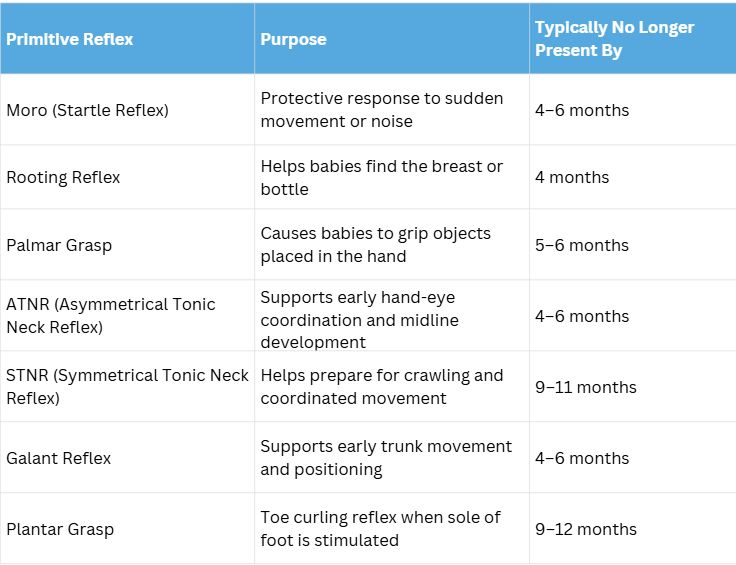
Common Primitive Reflexes and When They Typically Disappear
As a child's nervous system matures, primitive reflexes gradually fade away and are replaced by more purposeful, voluntary movement. Most primitive reflexes should no longer be present after the ages listed below.
Why Do Reflexes Become Retained?
In many children, reflex integration happens naturally with normal development. However, some factors may contribute to reflexes remaining active longer than expected.
Possible contributing factors include:
Premature birth
Birth trauma or difficult deliveries
Limited tummy time during infancy
Delays in gross motor development
Neurological differences
Lack of opportunities for varied movement experiences during infancy
Certain developmental disorders or neurological conditions
In many cases, there is no single identifiable cause of retained primitive reflexes. Some children may have contributing factors such as prematurity, limited early movement experiences, or developmental delays, but many children with retained reflexes do not have any clear risk factors at all.
It is also important for parents to know that this is not something they caused. Even in cases where contributing factors are NOT present, development is complex, and these patterns can simply occur as part of how a child’s nervous system matures.
How Can Retained Reflexes Show Up in Children?
Retained reflexes don't always present in obvious ways. Instead, parents may notice challenges in areas such as movement, coordination, attention, posture, or learning.
Retained Moro Reflex
Easily startled
Sensitivity to noise, light, or movement
Difficulty with emotional regulation
Anxiety or heightened stress responses
Retained ATNR (Asymmetrical Tonic Neck Reflex)
Difficulty crossing midline
Awkward pencil grip
Challenges with reading and tracking across a page
Poor hand-eye coordination
Retained STNR (Symmetrical Tonic Neck Reflex)
Slouched posture
Difficulty sitting still
Challenges with crawling history
Poor coordination during sports or playground activities
Retained Galant Reflex
Sensitivity to clothing, waistbands, or seams along the lower back
Constant fidgeting or difficulty sitting still in a chair
Tendency to squirm, shift, or move when sitting for schoolwork or meals
Difficulty maintaining upright posture while seated
In some cases, bedwetting or nighttime restlessness
General Signs
Clumsiness
Balance difficulties
Delayed motor milestones
Motion sensitivity
Difficulty with coordination tasks such as catching, throwing, or bike riding
Research has found associations between persistent primitive reflexes and challenges with motor skills, posture, coordination, and some aspects of learning and attention, although the strength of these relationships is still being studied.
An Important Note About the Research
The topic of retained reflexes has received significant attention in recent years. While studies have found associations between persistent reflexes and developmental challenges, experts continue to debate how much retained reflexes directly cause these difficulties. Current evidence suggests that retained reflexes may be one contributing factor rather than the sole explanation for attention, learning, or behavioral concerns.
For this reason, a comprehensive developmental evaluation is often more helpful than focusing on reflexes alone.
What Can Parents Do?
My biggest recommendation if you suspect your child may have retained reflexes is not to panic that something is wrong with your child. Instead, simply get them moving. Movement is one of the primary ways children develop and strengthen the neurological pathways that support coordination, balance, body awareness, and motor control.
Encourage Active Play & Purposeful Movement
Children learn through movement, and some simple exercises can help support body awareness, coordination, balance, and motor control.
Try incorporating activities such as:
Wall push-ups to build upper body strength, shoulder stability, and body awareness.
Snow angels on the floor to encourage coordination between the right and left sides of the body.
Cross-body marching (marching while touching the opposite hand to the opposite knee) to support crossing midline and coordination.
Marching with arms extended while turning the head side to side and maintaining a straight walking path.
Bear crawls across the room.
Crab walks for core and shoulder strength.
Army crawling on the stomach.
Bird-dog exercises (on hands and knees, extending the opposite arm and leg while maintaining balance).
Wheelbarrow walks with a parent holding the child's legs.
Balance beam walking using a line on the floor, curb, or balance beam.
Hopping on one foot and alternating sides.
Jumping jacks to promote coordination and body awareness.
Monkey bars and climbing structures to strengthen core muscles and coordination.
Obstacle courses that incorporate crawling, climbing, balancing, jumping, and crossing midline.
Yoga poses such as Tree Pose, Downward Dog, and Bird Dog that challenge balance and body control.
One of my general recommendations is simply encouraging activities that naturally incorporate crawling, climbing, balancing, crossing midline, and coordinating both sides of the body together. These movement patterns help build the foundation for more advanced motor skills, attention, and body awareness.
Don't Underestimate Play
Many of the best "activities" don't feel like activities at all. Time at the playground, riding bikes, swimming, gymnastics, martial arts, dance, hiking, and active outdoor play can all provide valuable movement experiences that support healthy neurological development.
Prioritize Outdoor Play
Outdoor environments naturally challenge a child's balance, coordination, strength, and spatial awareness. Running, hiking, exploring uneven terrain, and climbing all provide valuable opportunities for the nervous system to develop and mature.
Don't Skip the Basics
Many of the activities that support healthy development are surprisingly simple:
Limiting excessive screen time
Encouraging active free play
Participating in sports and recreational activities
Building core strength through climbing and crawling
Spending time outdoors
These everyday movement experiences can have a powerful impact on a child's overall development.
When Additional Support May Be Helpful
If you've noticed your child is struggling and movement-based play and at-home activities aren't leading to improvement, or if a teacher, pediatrician, or other third-party recommends exploring additional support, several therapies may be beneficial.
The options I most commonly recommend include occupational therapy, chiropractic care, physical therapy, and, in some cases, a developmental vision evaluation. The best choice depends on your child's specific challenges and developmental needs.
Occupational Therapy
A pediatric occupational therapist can evaluate:
Motor coordination
Sensory processing
Fine motor skills
Visual-motor integration
Handwriting and school-related skills
Occupational therapists often incorporate movement-based activities designed to support motor development and reflex integration.
Chiropractic Care
Many of our families choose to work with a pediatric chiropractor who has experience evaluating nervous system function and movement patterns in children. Some children may benefit from an approach that focuses on posture, movement, and overall nervous system support.
Physical Therapy
For children with gross motor delays, balance concerns, muscle weakness, or coordination challenges, physical therapy can help improve strength, stability, movement patterns, and overall function.
Vision Evaluation
Because some retained reflexes may influence visual tracking and eye coordination, a developmental vision evaluation can be helpful for children experiencing challenges with reading, eye tracking, or visual-motor skills.
When Should Parents Be Concerned?
Parents should consider discussing concerns with their pediatrician if they notice:
Persistent coordination difficulties
Delayed motor milestones
Frequent falls
Difficulty with handwriting not improving with age
Poor posture
Significant sensory sensitivities (clothing, etc)
Challenges with attention that affect school performance
Most importantly, concerns should be evaluated within the context of the child's overall development rather than focusing on any single reflex alone.
Concerned Your Child May Have Retained Reflexes?
If you've noticed challenges with coordination, balance, posture, attention, sensory sensitivities, or other developmental concerns, don't hesitate to bring them up with your pediatrician.
Many retained reflexes can be screened through simple movement-based assessments performed during an office visit. These evaluations help us determine whether retained reflexes may be contributing to your child's challenges and whether additional support could be beneficial.
While primitive reflexes are covered in pediatric training, more advanced assessment of retained reflexes and their potential impact on development often requires additional education and clinical experience. At Restore + Revive, we can help evaluate your child, provide guidance, and connect your family with trusted specialists when appropriate.
Most importantly, if you have concerns about your child's development, trust your instincts. Early evaluation and support can make a meaningful difference.
Contact
We would love the opportunity to meet your child, answer your questions, and help determine the best next steps for your family.
Contact our office at 817-720-6220 ext. 2 to schedule an appointment.